
Furnace Short Cycling: Causes and When to Call
Your furnace kicks on, runs a few minutes, shuts off, and starts again soon after. The house never quite feels warm, and the gas bill seems high for the comfort you get. That pattern is called short cycling. In an older Park Ridge, IL home on a cold night, it is worth sorting out, because constant starts wear parts faster and some causes are safety shutoffs doing their job.
The short version. Start with the filter, the thermostat location and the outdoor vent pipes. If the furnace still runs only a few minutes at a time, the common causes are overheating, a dirty flame sensor, venting or condensate faults, or a furnace that is too big for the house. A technician can tell which. If a CO alarm sounds or anyone feels sick, get everyone outside and call 911.
What short cycling looks like
There is no single correct cycle length. It depends on the weather, the furnace, the thermostat and the house. A furnace that runs longer on a bitter night and in shorter bursts on a mild one is normal. Short cycling is different: the burners light and shut off after only a few minutes, over and over, even when the house hasn't reached the setpoint.
Pay attention to whether the burners shut off before the blower does, and whether the furnace seems to stop before the house warms. Write down how long each cycle lasts and whether a status light blinks. That record helps a technician more than "it keeps turning off."
Common causes
Overheating from restricted airflow
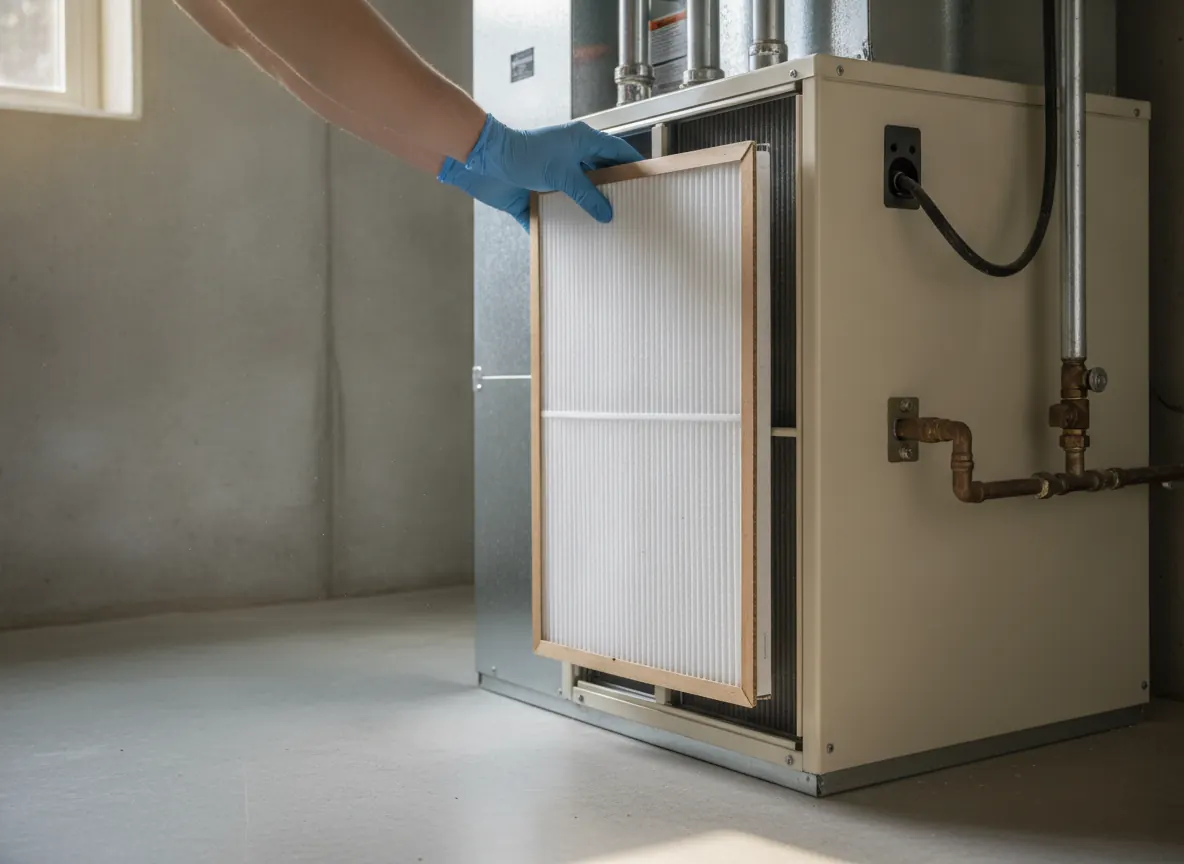
This is the cause to check first. A clogged filter, closed registers, blocked return grilles or a weak blower motor trap heat inside the furnace. The high-limit switch shuts the burners off, the furnace cools, and the cycle starts again. Replace the filter and open the registers. If the pattern continues, a technician can measure temperature rise and check the blower.
A dirty flame sensor
If the flame sensor can't confirm the flame, the control board shuts the gas off a few seconds after ignition and tries again. This often looks like the furnace lighting, running briefly and quitting. It is a common and usually modest repair, but it means opening the burner area, so leave it to a professional.
Thermostat problems
A thermostat near a supply register, a sunny window, a lamp or a kitchen can read warm air and stop the furnace early. Loose wiring or weak batteries can cause random starts and stops. Some thermostats also have cycle-rate settings that an installer can adjust. If you recently installed a new thermostat, check its setup for the type of equipment you have. The smart thermostat page covers compatibility in general terms.
Venting and pressure switch faults
Before the burners light, the furnace confirms that exhaust is moving out. A partially blocked vent, a cracked pressure switch hose, or a draft fan that is wearing out can let the furnace start and then shut it down mid-cycle. After heavy snow, check that outdoor furnace vent pipes aren't blocked. A blocked pipe can shut a high-efficiency furnace down, though clearing it doesn't guarantee a fix.
Condensate problems on high-efficiency furnaces
Condensing furnaces drain water through a small line and often a pump. If the line clogs or freezes, a safety switch can stop the furnace. Look for water around the base of the unit or a pump that hums without draining.
An oversized furnace
A furnace that is too big for the house heats the air near the thermostat quickly and shuts off before the rest of the home warms up. This is common when a furnace was sized by rule of thumb, or when a home has since gained insulation and new windows. Some homes near O'Hare received sound insulation through the City of Chicago's program, which can include added air conditioning; tell the company if your home was in it, because tighter homes need less heat. An oversized furnace can't be fixed with a part. It is something to plan for when the furnace is eventually replaced, with a load calculation instead of a guess.
Heat exchanger concerns
Overheating over many years can stress the heat exchanger. A cracked heat exchanger doesn't always cause short cycling, and short cycling doesn't mean you have a crack. If a technician mentions one, ask to see the evidence. The article on cracked heat exchanger signs explains what to ask.
What you can safely do
- Replace the air filter, and set a reminder to check it monthly during heating season.
- Open all supply registers and clear return grilles.
- Look at what is near the thermostat. Move lamps or heat sources away from it.
- Replace thermostat batteries.
- Check outdoor vent pipes after snow or drifting.
- Look for water around the furnace base.
- Note any status light blink code.
Don't open the burner compartment, bypass switches or adjust the gas valve. Safety switches that shut the furnace down are there for a reason.
What a technician typically checks
History and codes
They ask about cycle length and read the control board's fault history.
Airflow
They check the filter, blower, coil and temperature rise across the furnace.
Flame and ignition
They inspect the burners and test or clean the flame sensor.
Venting and drainage
They check the vent path, pressure switch, draft fan and condensate line.
Sizing and controls
They look at the thermostat and its settings and, if needed, whether the furnace is sized well for the house.
Typical costs
| Item | Typical range | Source |
|---|---|---|
| Service call / diagnostic / tune-up | $70–$200 | HomeGuide |
| Furnace repair, overall | $133–$505 (avg ≈ $318) | HomeAdvisor, 2026 |
| Blower motor | $150–$450 | Angi, 2025 |
Many short-cycling fixes fall at the low end, such as a filter, a sensor cleaning or a thermostat adjustment. A blower motor or control board costs more. If the furnace is old and oversized, a technician may raise replacement; see how long furnaces last and when to replace before you decide.
When to call
Call a heating company if the furnace still short cycles after a new filter and a thermostat check, if the house can't hold temperature, if water is collecting under the furnace, or if the furnace locks out entirely. If it stops heating altogether, see the no-heat guide. A routine fall tune-up can catch a dirty sensor or weak blower before the first cold snap.
Questions to ask before you hire
- Proof of Park Ridge contractor registration and insurance. Illinois doesn't issue a statewide HVAC license; towns set their own rules. In Park Ridge, contractors register with the City each year and must carry required insurance.
- A written estimate that lists the parts and labor, plus any trip or diagnostic fee.
- A written contract before any work over $1,000, plus the state pamphlet "Home Repair: Know Your Consumer Rights" (Illinois Home Repair and Remodeling Act).
- Who handles the permit, if the job is a furnace or boiler replacement.
- Warranty terms for parts and labor, in writing.
- Rebate paperwork, if new equipment may qualify for a 2026 Nicor Gas rebate.
Questions people ask
Is furnace short cycling dangerous?
Often it is a furnace protecting itself, for example a limit switch shutting off the burners when the unit overheats. It still deserves attention, because repeated overheating stresses parts. If a CO alarm sounds or anyone feels sick, get everyone outside and call 911.
Can a dirty filter cause short cycling?
Yes. A clogged filter is one of the most common causes. It restricts airflow, the furnace overheats, and the high-limit switch shuts the burners off until the furnace cools.
How long should a furnace run each cycle?
There is no single correct number. Cycle length depends on outdoor temperature, the furnace, the thermostat and the house. The warning sign is a furnace that shuts off after only a few minutes, again and again, before the house reaches the setpoint.
Can a thermostat cause short cycling?
Yes. A thermostat near a supply register, sunny window or other heat source can shut the furnace off early. Weak batteries, loose wiring or incorrect settings on a new thermostat can also cause frequent cycling.
Does an oversized furnace short cycle?
It can. An oversized furnace heats the air near the thermostat quickly and shuts off before the rest of the home warms. The fix is usually right-sizing at replacement time, based on a load calculation.
Park Ridge Furnace Repair is a free quote service, not a heating company. You describe the problem once, and independent heating companies serving Park Ridge, IL and nearby suburbs may reply with quotes. Companies may pay to receive requests or calls. Companies reply on their own schedules; in a no-heat emergency, also call a company directly. Request free quotes or call (877) 265-2390 to be connected with a local heating company.