
Furnace Pilot Light Out or Flame Sensor Failing?
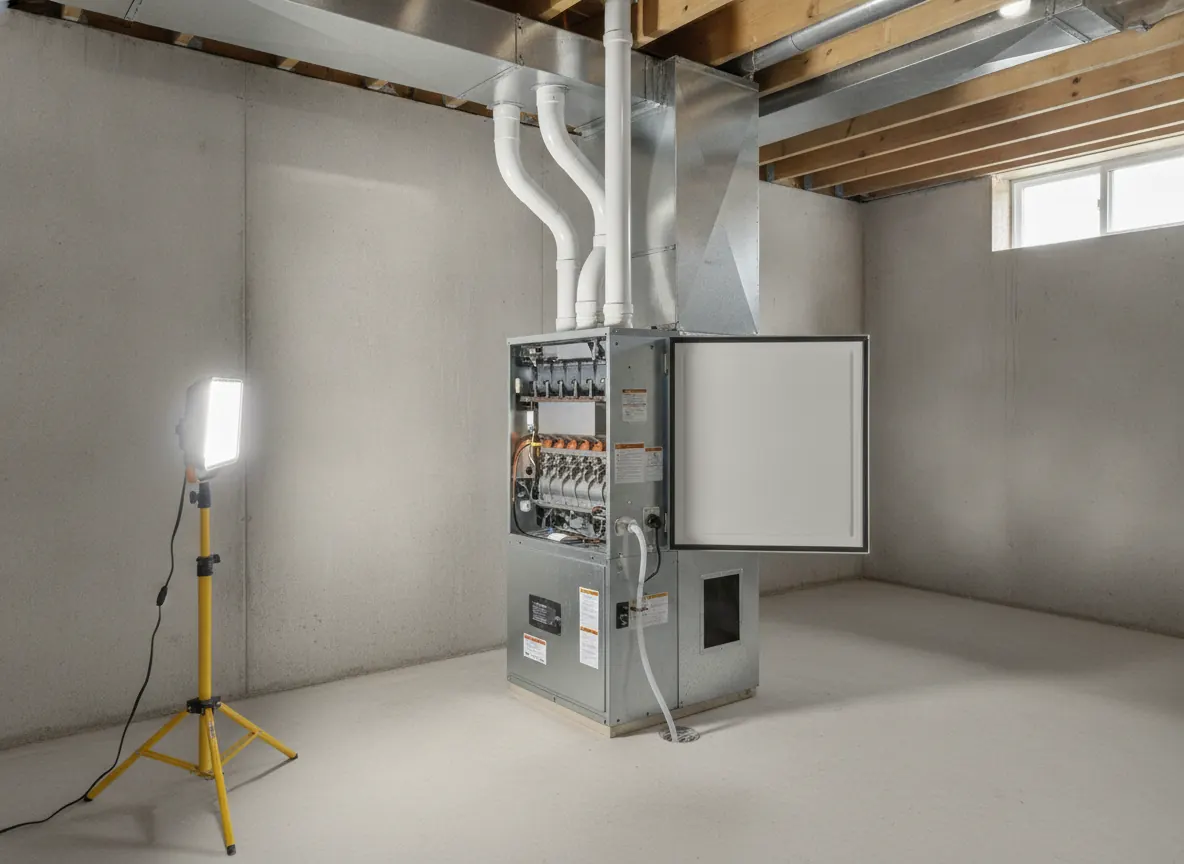
Smell gas? Leave first. If you smell gas, leave right away and don't use phones, switches or anything that could spark. Once you're outside and a safe distance away, call Nicor Gas at 888-642-6748 or 911. Don't try to find or stop the leak yourself. In Edison Park or Norwood Park (City of Chicago): leave and call Peoples Gas at 866-556-6002 or 911 from a safe place.
Carbon monoxide. If a CO alarm sounds or anyone feels sick, get everyone outside and call 911.
The furnace clicks, maybe lights for a moment, then goes quiet, and the house keeps getting colder. Or you look through the little window on an older unit and the pilot flame is gone. In Park Ridge, IL, where most homes heat with gas, these are some of the most common winter heating calls. This guide explains what the pilot, igniter and flame sensor do, what each failure tends to look like, what you can safely check, and what to tell the company you call.
One rule on this site: we don't suggest do-it-yourself work on gas parts. That includes relighting a pilot that keeps going out, cleaning a flame sensor or touching the gas valve. Leave those to a heating company.
Which ignition does your furnace have?
How a furnace lights its burners depends mostly on its age.
- Standing pilot. A small flame burns all the time and lights the burners when heat is called for. Common on older furnaces and many older boilers. A thermocouple or thermopile next to the pilot proves the flame is there.
- Intermittent pilot. A spark lights a small pilot only when the furnace starts, and the pilot lights the burners. You may hear a ticking sound at startup.
- Hot surface igniter. A ceramic element glows orange and lights the burners directly. Most newer furnaces use this. There is no pilot flame to go out.
If you aren't sure, the label inside the furnace door or the owner's manual usually says. Many furnaces also have a small status light on the control board, visible through a window in the panel.
What each failure tends to look like
| What you notice | Often points to |
|---|---|
| Burners light, then shut off after a few seconds, and the furnace tries again | Flame sensor that can't prove the flame (often dirty), or a grounding problem |
| Inducer fan runs, no orange glow, no flame | Failed hot surface igniter, pressure switch or control issue |
| Ticking or clicking at startup, no flame | Spark igniter, pilot assembly or gas valve problem |
| Standing pilot out, or won't stay lit | Thermocouple, a dirty pilot opening, or drafts |
| Furnace stops trying altogether after several attempts | Safety lockout after repeated failed ignition |
These are common patterns, not a diagnosis. A furnace that lights and shuts off can also be a short-cycling problem with a different cause, and a furnace that runs but blows cool air is covered in why your furnace is blowing cold air.
The flame sensor, in plain language
A flame sensor is a thin metal rod that sits in the burner flame. When the burners light, it sends a tiny signal back to the control board that says "the flame is there." If the board doesn't get that signal within a few seconds, it shuts off the gas. That's a safety feature: the furnace refuses to keep sending gas into a chamber where nothing is burning.
Over time, the rod can pick up a coating that weakens the signal. The burners light normally, then go out, over and over. After several failed tries, many furnaces lock out for a while. Cleaning or replacing the sensor is a routine part of many service calls, and checking it is often part of a fall tune-up.
Standing pilots and older boilers
About half of Park Ridge homes were built before 1960 (ACS 2020–2024), and older homes may have boilers and radiators instead of a furnace. Older boilers often use a standing pilot. If the pilot on a boiler or older furnace has gone out more than once, something is putting it out: a worn thermocouple, a dirty pilot, or a draft. Relighting it again doesn't fix that. The boiler and radiator page covers what a boiler service usually involves.
What you can safely check first
Thermostat
Set to Heat, set a few degrees above room temperature, and check for a blank screen or low batteries.
Breaker and furnace switch
Check the breaker panel, and the switch near the furnace that looks like a light switch. It should be on.
Filter
Replace a dirty filter. A clogged filter can make a furnace overheat and shut itself down.
Outdoor vent pipes
After heavy snow, check that outdoor furnace vent pipes aren't blocked. On a high-efficiency furnace, a blocked vent can stop ignition, though clearing it won't fix every problem.
Status light
Note the blink pattern or code and the furnace's model number. That helps the company arrive with the right part.
If none of that works, stop there. Repeatedly resetting a furnace that keeps failing to light doesn't help and can hide the real problem.
Repair or replace?
An igniter or flame sensor is usually a modest repair, not a reason to replace a furnace on its own. The bigger question comes when an old furnace needs several repairs in a season, or when a technician reports a cracked heat exchanger. The guide on how long furnaces last in Chicago-area homes walks through that decision, and Nicor Gas's 2026 program lists rebates of $150 for a 95% AFUE furnace and $225 for 97% AFUE; programs change, so check nicorgas.com/homerebates.
What these repairs typically cost
Published national estimates, not quotes (HomeAdvisor 2026; HomeGuide; Angi 2025, as listed when checked in November 2026). Quotes come from independent companies, not this site.
| Item | Typical range | Source |
|---|---|---|
| Service call / diagnostic / tune-up | $70–$200 | HomeGuide |
| Furnace repair, overall | $133–$505 (avg ≈ $318) | HomeAdvisor, 2026 |
| Furnace replacement | $2,000–$5,400 (avg ≈ $3,700) | HomeGuide |
The Park Ridge furnace repair cost guide has more ranges and a calculator.
Questions to ask the company
- Can you show proof of Park Ridge contractor registration and insurance? Illinois doesn't issue a statewide HVAC license; towns set their own rules.
- Is there a trip or diagnostic fee, and is it applied to the repair?
- Will I get a written estimate before work starts?
- What warranty comes with the part and the labor, in writing?
- Will you check for carbon monoxide before you leave?
For more on igniters, blowers and pressure switches, see the furnace repair page. If the house is cold and getting colder, the no-heat page covers frozen pipes and assistance programs.
Frequently asked questions
Why does my furnace light and then shut off after a few seconds?
The most common cause is a flame sensor that can't prove the flame, often because the rod has a coating on it. The control board shuts the gas off as a safety step and tries again, then may lock out. A heating company can clean or replace the sensor and check the grounding.
Should I relight my furnace pilot light myself?
This site doesn't recommend DIY work on gas parts. If the pilot has gone out more than once, a worn thermocouple, dirty pilot or draft is likely the cause, and relighting won't fix it. If you smell gas at any point, leave and call Nicor Gas at 888-642-6748 or 911 from outside.
Do newer furnaces have a pilot light?
Most newer furnaces don't have a standing pilot. They use a hot surface igniter that glows to light the burners, or a spark-lit intermittent pilot that only burns during startup. The label inside the furnace door or the owner's manual usually tells you which one you have.
How much does a flame sensor or igniter repair cost?
We haven't found a dated, independent figure for those parts alone. As broad guides, HomeGuide lists $70–$200 for a service call or diagnostic, and HomeAdvisor lists furnace repair overall at $133–$505 (2026). These are national estimates, not quotes.
Park Ridge Furnace Repair is a free quote service, not a heating company. You describe the problem once, and independent heating companies serving Park Ridge, IL and nearby suburbs may reply with quotes. Companies may pay to receive requests or calls. Companies reply on their own schedules; in a no-heat emergency, also call a company directly. Request free quotes or call (877) 265-2390 to be connected with a local heating company.