
No Heat After a Power Outage: A Checklist
Smell gas? Leave first. If you smell gas, leave right away and don't use phones, switches or anything that could spark. Once you're outside and a safe distance away, call Nicor Gas at 888-642-6748 or 911. Don't try to find or stop the leak yourself. In Edison Park or Norwood Park (City of Chicago): leave and call Peoples Gas at 866-556-6002 or 911 from a safe place.
Carbon monoxide. If a CO alarm sounds or anyone feels sick, get everyone outside and call 911.
Generators: never run a generator, grill or camp heater indoors, in a garage or near open windows, and don't use a gas oven or range to heat the house. All of them can fill a home with carbon monoxide. Illinois law requires a working carbon monoxide alarm within 15 feet of every sleeping room in most homes (430 ILCS 135); if yours runs on batteries, it should keep working during an outage.
The power comes back, the lights turn on, and the furnace stays silent. It's a common winter call in Park Ridge, IL, and the fix is often simple. A gas furnace still needs electricity to run its blower, its inducer fan, its igniter and its control board, and some of those don't always restart cleanly after an outage. Work through the checklist below in order. If you get to the end and there's still no heat, call a heating company.
Why a gas furnace needs power
Even though the heat comes from burning gas, almost every modern furnace depends on electricity. The thermostat calls for heat, the control board starts the inducer fan to clear the combustion chamber, a pressure switch confirms the vent is open, the igniter lights the burners, the flame sensor proves the flame, and finally the blower pushes warm air through the house. If any step fails, the board shuts things down for safety. Most boilers also need power for their controls and circulator pumps. A power outage, a surge when power returns, or a tripped breaker can interrupt any part of that chain.
The checklist
Make sure power is really back
Check that other circuits in the house work. If your street is still out, report it to ComEd and wait. Partial power, where some lights work and others don't, is a reason to call ComEd before anyone else.
Check the thermostat
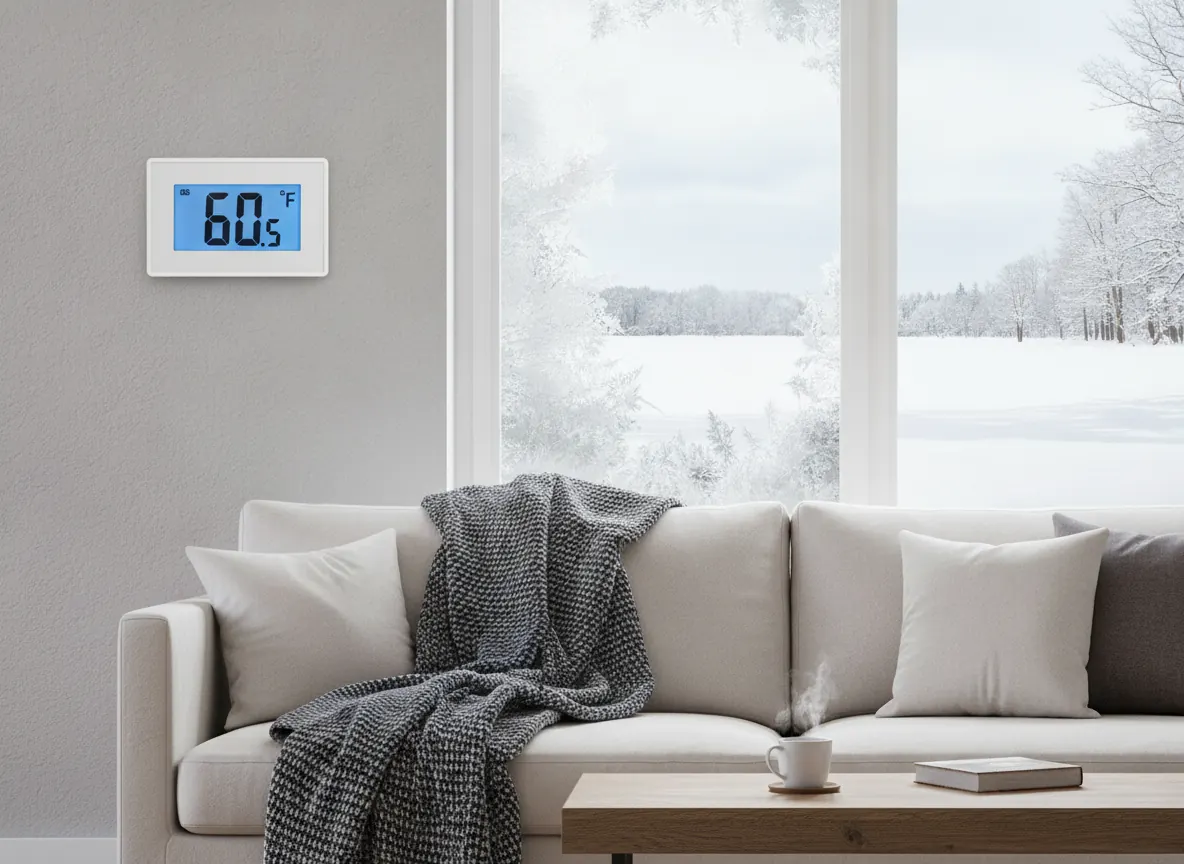
A blank screen may need new batteries or a reset. A smart thermostat may need a few minutes to reconnect to Wi-Fi. Confirm it is set to Heat and set a few degrees above room temperature.
Check the breaker panel
Look for a furnace or boiler breaker that has tripped to the middle or off position. Reset it once. If it trips again, leave it off and call.
Find the furnace switch
There's usually a switch on or near the furnace that looks like a light switch. During an outage, someone may have turned it off by mistake. Make sure it's on.
Check the front panel
Many furnaces won't run if the lower door isn't seated. If someone opened it, close it firmly.
Give it a few minutes
A furnace goes through its startup steps before you feel heat, and some wait a few minutes after power returns. Listen for the inducer fan, then the burners, then the blower.
Read the status light
If the control board has a blinking light, write down the pattern and the model number. Many furnaces lock out after several failed tries to light.
Check outdoor vent pipes
After heavy snow, check that outdoor furnace vent pipes aren't blocked. A blocked vent can keep a high-efficiency furnace from starting, though clearing it won't fix every no-heat problem.
Call if it still won't run
Stop resetting. Tell the company what happened during the outage, what you've checked and what the status light shows.
When the outage damaged something
A surge when power returns, or repeated flickering, can damage a furnace's control board, an igniter or a blower motor. Signs include a dead control board with no status light at all, a burning electrical smell, or a breaker that trips every time the furnace tries to start. Turn the furnace off and call a heating company. If you smell burning and see smoke, leave and call 911.
If the furnace lights and then shuts off over and over after an outage, the problem may be the flame sensor or igniter rather than the outage itself. Pilot light out or flame sensor failing? explains those parts. Older boilers with a standing pilot can also go out during an outage; the boiler and radiator page covers those systems.
Keeping the house and pipes safe while you wait
O'Hare averages a January low near 19°F (NOAA 1991–2020 normals) and about 6 or 7 nights a year at or below zero. On January 30, 2019, O'Hare hit −23°F, the coldest in Chicago in 34 years (National Weather Service). A house loses heat quickly on nights like that.
- Close doors to rooms you aren't using and gather in one room.
- Open cabinet doors under sinks on outside walls so warmer air reaches the pipes.
- Let a faucet on an outside wall drip slowly.
- Use space heaters only as the maker directs, away from curtains and bedding, and never leave them running unattended.
- If someone in the home is elderly, very young or has a health condition, consider moving them somewhere warm.
If a pipe has already frozen or burst, shut off the main water valve and call a plumber. The no-heat page has more on frozen pipes.
Help with costs and bills
If the outage left you with a repair you can't afford, Cook County households can apply for LIHEAP through CEDA (800-571-2332). CEDA also offers furnace repair or replacement vouchers to eligible homeowners whose heat is out or red-tagged. Eligibility is not guaranteed. Separately, from December 1 to March 31, Illinois limits utility shutoffs for customers who heat with gas or electric.
Renters
Tell your landlord in writing that the heat isn't working, with the date and what you checked. In Edison Park or Norwood Park, which are part of Chicago: Chicago's Heat Ordinance runs September 15 to June 1. In apartments with central heat, landlords must keep at least 68°F from 8:30 a.m. to 10:30 p.m. and 66°F overnight. Tenants can report no heat by calling 311. That ordinance does not apply in Park Ridge or the suburbs.
What repairs after an outage typically cost
Published national estimates, not quotes (HomeAdvisor 2026; HomeGuide; Angi 2025, as listed when checked in November 2026). Quotes come from independent companies, not this site.
| Item | Typical range | Source |
|---|---|---|
| Service call / diagnostic / tune-up | $70–$200 | HomeGuide |
| Furnace repair, overall | $133–$505 (avg ≈ $318) | HomeAdvisor, 2026 |
| Blower motor | $150–$450 | Angi, 2025 |
| Boiler repair | $150–$700 | HomeGuide |
The Park Ridge furnace repair cost guide has more ranges and a calculator. When you call, ask for proof of Park Ridge contractor registration and insurance, whether there's a trip or diagnostic fee, and a written estimate before work starts. If an outage keeps knocking out your thermostat, the smart thermostat page covers wiring and compatibility, and the furnace repair page explains the other parts that commonly fail.
Frequently asked questions
Why is my furnace not working after a power outage?
Common reasons are a tripped breaker, a furnace switch that was turned off, a thermostat that needs batteries or a reset, or a furnace that locked out after failed starts. A surge can also damage the control board. Work through the checks in order, and call a heating company if it still won't run.
How do I reset my furnace after a power outage?
Check the breaker and the furnace switch, confirm the thermostat is set to Heat, and give the furnace a few minutes to go through its startup. Reset a tripped breaker only once. If the furnace still won't light, write down the status light pattern and call rather than resetting again.
Is it safe to use a generator to run my furnace?
Connecting a generator to a furnace should be done by a qualified electrician with the right transfer equipment. Never run a generator indoors, in a garage or near windows, because of carbon monoxide. If a CO alarm sounds or anyone feels sick, get everyone outside and call 911.
How long before pipes freeze with no heat?
It depends on the outdoor temperature, insulation and where the pipes run. Pipes on outside walls, in crawlspaces or near garages are most at risk. Open sink cabinets on outside walls, let a faucet drip, and if a pipe bursts, shut off the main water valve and call a plumber.
Park Ridge Furnace Repair is a free quote service, not a heating company. You describe the problem once, and independent heating companies serving Park Ridge, IL and nearby suburbs may reply with quotes. Companies may pay to receive requests or calls. Companies reply on their own schedules; in a no-heat emergency, also call a company directly. Request free quotes or call (877) 265-2390 to be connected with a local heating company.