
How to Bleed Radiators in an Older Park Ridge Home
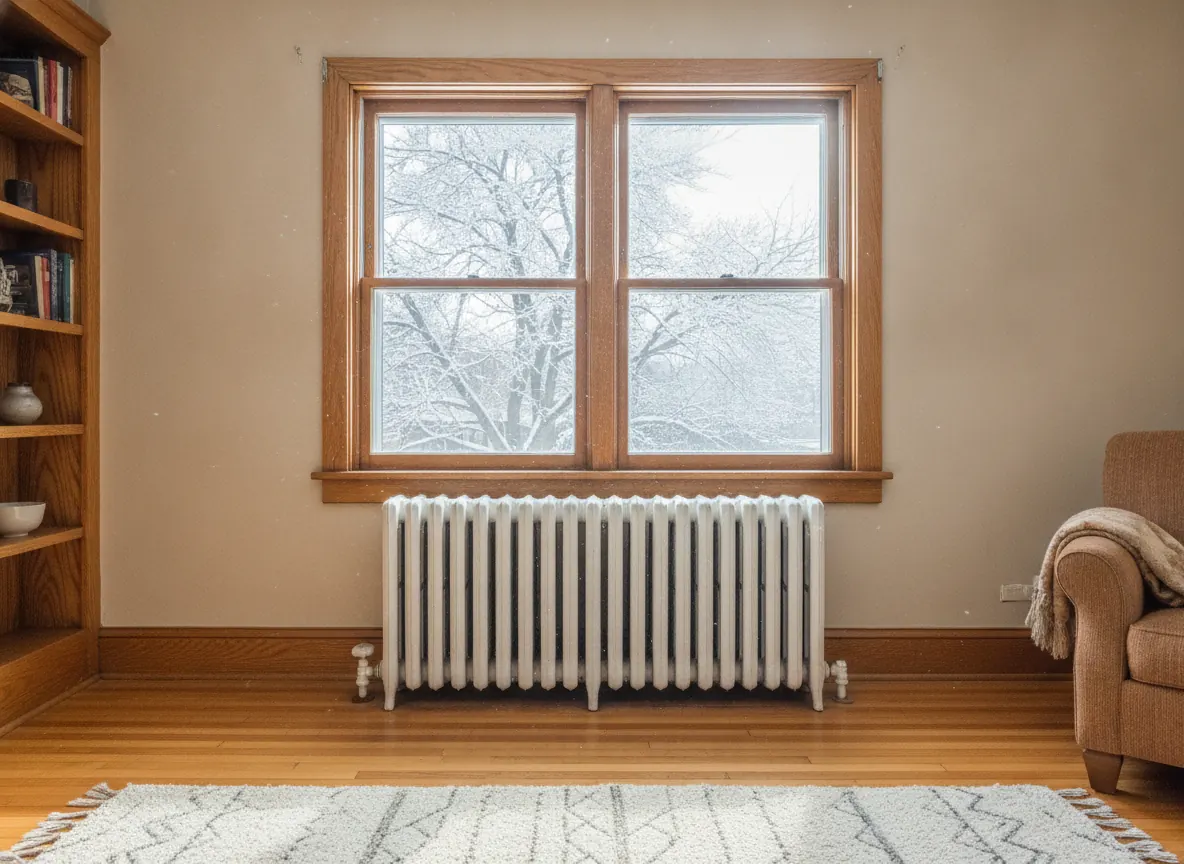
A radiator that is hot at the bottom and cold at the top usually has trapped air. Bleeding it lets the air out so hot water can fill the whole radiator again. It is one of the few heating jobs most homeowners can do themselves, as long as the system is a hot water system and you know when to stop. Older homes in Park Ridge, IL may have boilers and radiators instead of a furnace, so this question comes up here more than in newer suburbs.
The short version. Only hot water radiators are bled with a key. Steam radiators have automatic air vents and shouldn't be opened. For hot water: turn the heat down, let the radiator cool, open the bleed valve a little with a radiator key, close it when water comes out steadily, then check the boiler pressure. If you have to bleed often, or the pressure keeps dropping, call a boiler technician.
Is your system hot water or steam?
About half of Park Ridge homes were built before 1960 (ACS 2020–2024), and older homes may have boilers and radiators instead of a furnace. There is no count of how many, so check your own house. The two common boiler systems look similar from the living room but work differently.
| Clue | Hot water (hydronic) | Steam |
|---|---|---|
| Pipes at each radiator | Usually two, one in and one out | Often one pipe with a valve at the bottom |
| Small fitting near the top | A bleed valve with a square stem or slot | A larger air vent, often bullet or cylinder shaped |
| Gauge on the boiler | Pressure and temperature gauge | Low-pressure steam gauge and a sight glass showing water level |
| Sounds | Mostly quiet, some gurgling with air | Hissing vents and sometimes banging pipes |
If you aren't sure, don't open anything. A heating technician can tell you in a minute, and it is worth knowing before winter.
What you need
- A radiator key that fits your bleed valves. Hardware stores sell common sizes; some valves take a flat screwdriver instead.
- An old towel and a small cup or bowl.
- A flashlight, and a phone camera to photograph the boiler gauge before you start.
How to bleed a hot water radiator
Turn the heat down
Lower the thermostat and let the radiators cool. Water in a running system is hot enough to burn, and bleeding a cool system is safer and lets air collect at the top.
Note the boiler pressure
Look at the pressure gauge on the boiler and take a photo. You will compare it afterward.
Pick an order
Many guides suggest starting with the radiator farthest from the boiler on the lowest floor, then working toward it and upstairs. If your system's manual says otherwise, follow the manual.
Open the valve slowly
Hold the towel and cup under the valve. Turn the key about a quarter turn counterclockwise. You should hear air hiss.
Close it when water flows
When a steady stream of water replaces the air and sputtering, close the valve snugly. Don't force it or remove it.
Repeat and recheck pressure
Do each radiator that needs it, then look at the boiler gauge again. If the pressure has dropped below the range your installer or the boiler manual gives, the system may need water added. Many modern systems do this automatically; older ones may need a technician.
Turn the heat back up
Raise the thermostat and check that each radiator warms evenly over the next hour or two.
What not to touch
- Steam radiator air vents. Don't open or remove them to "bleed" a steam radiator. A vent that is stuck or spitting water needs replacing, which is a simple job for a technician.
- The boiler's pressure relief valve. It is a safety device. If it drips or discharges, call a technician.
- Gas valves, burners or controls on the boiler. Leave all gas components to a professional.
If you smell gas, leave right away and don't use phones, switches or anything that could spark. Once you're outside and a safe distance away, call Nicor Gas at 888-642-6748 or 911. Don't try to find or stop the leak yourself.
When bleeding doesn't fix it
Air in a sealed hot water system has to come from somewhere. If you need to bleed radiators every few weeks, the system may be taking on fresh water through a leak, a faulty fill valve or a failing expansion tank. Other signs that call for a technician:
- A radiator that stays cold at the bottom but warm at the top, which can point to sludge.
- Pressure that keeps dropping, or climbs when the boiler is hot.
- Water on the floor at a radiator valve or under the boiler.
- Banging or loud knocking pipes.
- Rooms that won't heat even with every radiator bled.
See boiler and radiator repair in Park Ridge, IL for what a technician typically checks.
Typical costs
| Item | Typical range | Source |
|---|---|---|
| Radiator bleeding / leak | $100–$200 / $150–$600 | Angi, 2025 |
| Boiler repair | $150–$700 | HomeGuide |
| Service call / diagnostic / tune-up | $70–$200 | HomeGuide |
If the boiler itself is at the end of its life, Nicor Gas's 2026 program lists a $350 rebate for a boiler of 95% AFUE or higher, and $500 for a qualifying combination boiler that also heats your water. Programs change; check nicorgas.com/homerebates. Park Ridge's permit fee schedule lists a permit for furnace and boiler replacement. Your contractor confirms and pulls it with the City (847-318-5291).
Radiators and comfort in a cold snap
O'Hare averages about 6,000 heating degree days a year and a January low near 19°F (NOAA 1991–2020 normals). A radiator system that is fully bled and at the right pressure heats evenly and quietly. Fall is a good time to bleed, before the first cold week. If a boiler fails outright in winter, see the no-heat guide for frozen-pipe tips and Cook County assistance.
Questions to ask before you hire
- Proof of Park Ridge contractor registration and insurance. Illinois doesn't issue a statewide HVAC license; towns set their own rules. In Park Ridge, contractors register with the City each year and must carry required insurance.
- A written estimate that lists the parts and labor, plus any trip or diagnostic fee.
- A written contract before any work over $1,000, plus the state pamphlet "Home Repair: Know Your Consumer Rights" (Illinois Home Repair and Remodeling Act).
- Who handles the permit, if the job is a furnace or boiler replacement.
- Warranty terms for parts and labor, in writing.
- Rebate paperwork, if new equipment may qualify for a 2026 Nicor Gas rebate.
Questions people ask
How do I know if my radiator needs bleeding?
A hot water radiator that is warm at the bottom and cool at the top usually has trapped air. Gurgling sounds are another clue. Steam radiators work differently and are not bled with a key.
Can I bleed a steam radiator?
Not with a key. Steam radiators use automatic air vents that let air out as steam rises. If a vent is stuck, hissing constantly or spitting water, have a technician replace it rather than opening it.
Should the heat be on or off when bleeding radiators?
Turn the heat down and let the radiators cool first. Hot water can burn, and air collects at the top of a cool radiator, which makes bleeding more effective.
What pressure should my boiler be after bleeding?
Use the range your installer or the boiler's manual gives. If the pressure drops below that range after bleeding, the system may need water added, which some systems do automatically. If it keeps dropping, call a technician.
How much does it cost to have radiators bled?
Published national estimates list radiator bleeding at $100 to $200 and radiator leak repair at $150 to $600 (Angi, 2025). Quotes come from independent companies and depend on the home.
Park Ridge Furnace Repair is a free quote service, not a heating company. You describe the problem once, and independent heating companies serving Park Ridge, IL and nearby suburbs may reply with quotes. Companies may pay to receive requests or calls. Companies reply on their own schedules; in a no-heat emergency, also call a company directly. Request free quotes or call (877) 265-2390 to be connected with a local heating company.