
Heat Pump vs. Furnace for Northwest Cook County Winters
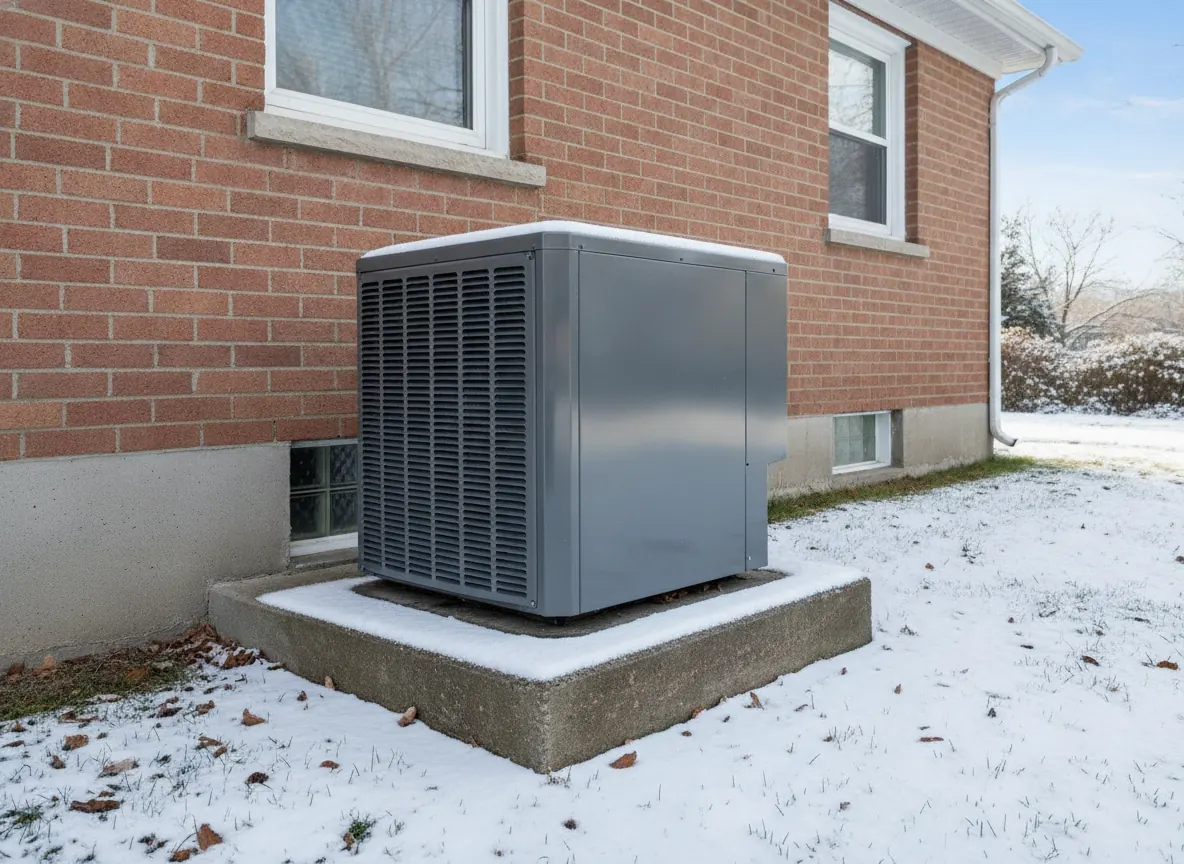
When a furnace gets old or a repair quote comes in high, many homeowners in Park Ridge, IL ask whether the next system should be a heat pump. Both can work here. The right choice depends on your house, your ductwork and how you want to heat through a northwest Cook County January.
The short version. A gas furnace makes heat by burning fuel, so its output doesn't drop when it gets colder outside. A heat pump moves heat from outdoor air into the house using electricity, and it also cools in summer, but its heating capacity falls as the temperature drops. Cold-climate heat pumps hold up better in deep cold, and many Chicago-area installs pair a heat pump with a gas furnace as backup. If your heat is out right now, fix the immediate problem first and plan the bigger decision later.
How a furnace and a heat pump each make heat
A gas furnace burns natural gas inside a sealed chamber. The heat passes through a metal heat exchanger, and a blower pushes house air across it and out through the ducts. Exhaust gases leave through a flue or, on high-efficiency models, through plastic vent pipes on an outside wall. Efficiency is rated by AFUE: a 95% AFUE furnace turns about 95% of the gas it burns into heat for the house.
A heat pump works more like an air conditioner running in reverse. Refrigerant picks up heat from the outdoor air, even cold air, and releases it indoors. Because it moves heat rather than making it, a heat pump can deliver more heat than the electricity it uses. The catch is that the colder the outdoor air, the less heat there is to move, so output and efficiency fall in deep cold. Most heat pumps in cold climates have some form of backup: electric resistance strips in the air handler, or a gas furnace.
"Cold-climate" heat pumps are designed to keep more of their capacity at low temperatures, but they still need sizing for your house and a clear backup plan.
What northwest Cook County winters ask of a heating system
O'Hare averages about 6,000 heating degree days a year and a January low near 19°F (NOAA 1991–2020 normals). Heating degree days outnumber cooling degree days about six to one, so this is a heating-first climate. The same normals show about 6 or 7 nights a year at or below zero, most of them in January.
Then there are the outliers. On January 30, 2019, O'Hare hit −23°F, the coldest in Chicago in 34 years (National Weather Service), with a wind chill near −52°F that morning. A heating system in Park Ridge doesn't need to be built around one record night, but it does need a clear plan for nights like that one.
Side by side
| Question | Gas furnace | Heat pump |
|---|---|---|
| Fuel | Natural gas (Nicor Gas in Park Ridge and the nearby suburbs) | Electricity (ComEd) |
| Cooling | No; needs a separate central air conditioner | Yes; heats and cools |
| Output in deep cold | Steady regardless of outdoor temperature | Falls as it gets colder; cold-climate models hold up better |
| Backup heat | Not usually needed | Electric strips or a gas furnace (dual fuel) |
| Outdoor equipment | Vent pipes or chimney flue | Outdoor unit that must stay clear of snow and ice |
| 2026 utility rebates | Nicor Gas lists $150 (95% AFUE) or $225 (97% AFUE) | ComEd offers rebates on some heat pumps; check comed.com |
Dual fuel: why many local installs use both
A dual-fuel system pairs an outdoor heat pump with a gas furnace inside. The heat pump handles mild and moderately cold days, and the furnace takes over when it gets cold enough that gas is the better choice. The installer sets that switch-over point based on the equipment, your home and local energy prices. The furnace's blower moves the air in both modes, so a dual-fuel setup usually uses the same ductwork you already have.
Your house matters more than the brochure
Gas heat dominates around here. In Park Ridge, 85.6% of occupied homes heat with utility gas and 11.9% with electricity (ACS 2020–2024). Electric heat is more common in some neighboring towns, including Mount Prospect (23.0%) and Glenview (19.4%), where more apartments and condos likely account for part of the difference. If you already heat with electric baseboard or an older electric furnace, a heat pump can be a big change in operating cost, and it is worth getting quotes. See Mount Prospect and Glenview for those towns.
About half of Park Ridge homes were built before 1960 (ACS 2020–2024), and older homes may have boilers and radiators instead of a furnace. A home heated by radiators has no ductwork for a ducted heat pump, so that conversation is different: it usually means keeping the boiler and adding cooling or a ductless system, rather than swapping one box for another. The boiler and radiator page covers that equipment.
Many homes near O'Hare received sound insulation through the City of Chicago's program, which can include added air conditioning; tell the company if your home was in it, since existing cooling equipment can change what makes sense.
Costs, rebates and the tax credit question
Published national estimates put a standard furnace replacement at $2,000–$5,400 (avg ≈ $3,700) and a high-efficiency furnace replacement at $3,300–$10,000 (HomeGuide, as listed when checked in November 2026). These are not quotes. We did not find a dated, independent heat pump installation range we were comfortable publishing, so compare written quotes for both options on the same house.
Nicor Gas's 2026 program lists rebates of $150 for a 95% AFUE furnace and $225 for 97% AFUE, $350 for a high-efficiency boiler, and $25 for a smart thermostat. Programs change; check nicorgas.com/homerebates. ComEd offers rebates on some heating equipment such as heat pumps and smart thermostats; check comed.com for current amounts. The federal tax credit that used to cover furnaces and heat pumps does not apply to equipment installed in 2026. The 2026 rebate guide has the details.
Running costs depend on gas and electric rates and how well the house holds heat, so ask each company to explain any savings estimate in writing.
Permits and paperwork
Park Ridge's permit fee schedule lists a permit for furnace and boiler replacement. Your contractor confirms and pulls it with the City (847-318-5291). Other towns set their own rules, so check with the village's building department. In Illinois, a home repair contractor must give you a written contract before starting work over $1,000, plus the state pamphlet "Home Repair: Know Your Consumer Rights." Questions or problems: Illinois Attorney General, 1-800-386-5438.
Questions to ask before you choose
- Did you do a heating load calculation for this house, or size it from the old unit?
- What heats the house when the heat pump can't keep up, and at what outdoor temperature does that happen?
- Can the existing ducts handle the airflow, and does the electrical panel need work?
- Can you show proof of Park Ridge contractor registration and insurance?
- Will I get a written estimate, a written contract and written warranty terms?
- Who files the Nicor Gas and ComEd rebate paperwork?
If the system you have still runs but needs a fix, the heat pump repair page and the furnace repair page explain common problems, and the furnace replacement page covers AFUE choices. For age and repair-versus-replace guidance, read how long furnaces last in Chicago-area homes.
Frequently asked questions
Can a heat pump heat a house in Park Ridge, IL on its own?
Cold-climate heat pumps can carry much of the load, but output falls in deep cold. O'Hare sees about 6 or 7 nights a year at or below zero, so most local installs include backup heat, either electric strips or a gas furnace. Ask the installer exactly what heats the house on the coldest nights.
What is a dual-fuel system?
It pairs an outdoor heat pump with an indoor gas furnace. The heat pump runs on milder days and the furnace takes over below a switch-over temperature the installer sets. It usually uses your existing ducts and gives you central cooling as well.
Is there a federal tax credit for a heat pump or furnace in 2026?
No. The federal Energy Efficient Home Improvement Credit does not apply to equipment placed in service after December 31, 2025. Utility rebates may still apply: Nicor Gas lists 2026 furnace rebates, and ComEd offers rebates on some heat pumps; check comed.com for current amounts.
My house has radiators. Can I switch to a heat pump?
Not the usual ducted kind, because there are no ducts. Homes with boilers and radiators often keep the boiler and add cooling or a ductless system. A heating company can look at the boiler's condition and the layout and explain the options in writing.
Park Ridge Furnace Repair is a free quote service, not a heating company. You describe the problem once, and independent heating companies serving Park Ridge, IL and nearby suburbs may reply with quotes. Companies may pay to receive requests or calls. Companies reply on their own schedules; in a no-heat emergency, also call a company directly. Request free quotes or call (877) 265-2390 to be connected with a local heating company.